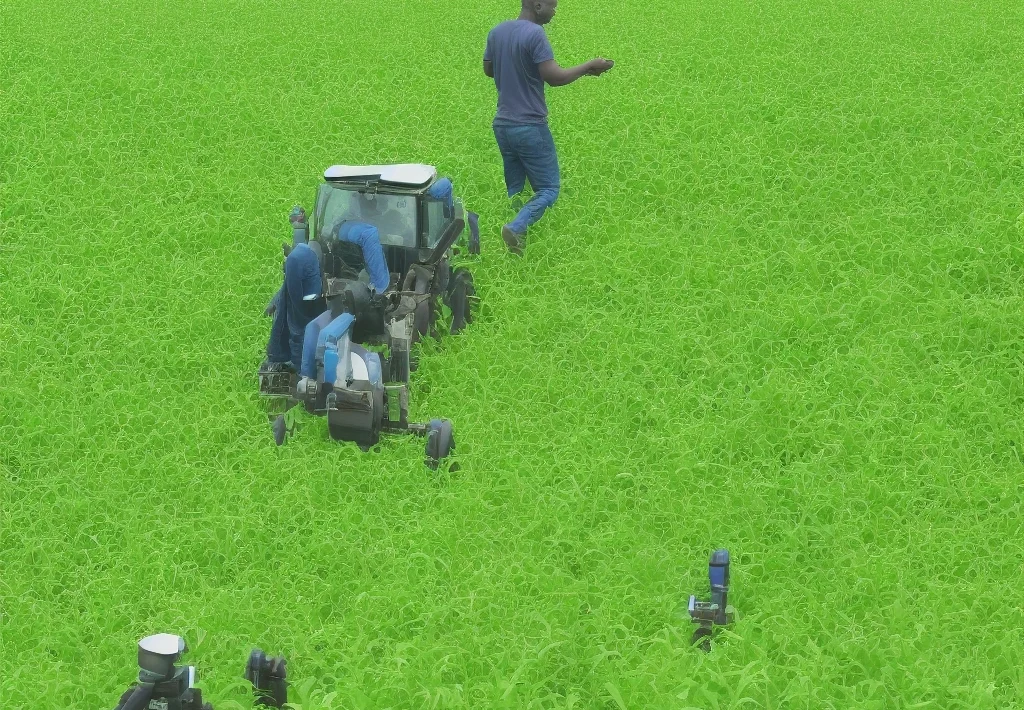
The Dawn of AI-Powered Agriculture in Africa
The integration of AI into African agriculture is not merely a technological leap but a necessary response to the continent’s pressing food security challenges. With over 60% of Africa’s population relying on agriculture, the sector faces dual pressures from climate change and population growth. AI-driven precision farming, particularly in crop disease detection, offers a scalable solution by transforming vast amounts of agricultural data into actionable insights. For instance, in Kenya, startups like Hello Tractor have deployed AI-powered systems that analyze satellite imagery and sensor data to predict pest outbreaks in maize fields.
These systems use computer vision models trained on localized datasets, achieving up to 92% accuracy in identifying early signs of diseases like maize lethal necrosis. Such precision not only minimizes crop loss but also reduces the need for excessive chemical inputs, aligning with sustainable farming practices. The effectiveness of these models hinges on the quality of agricultural data, which is increasingly being collected through IoT sensors and drones. In Nigeria, drone-based monitoring systems have been deployed in cassava farms to detect cassava brown streak disease, a threat that has devastated yields.
By capturing high-resolution images and processing them via edge computing devices, farmers receive real-time alerts, enabling swift intervention. This approach exemplifies how AI in African agriculture is bridging the gap between data collection and practical application, even in regions with limited infrastructure. Edge computing has emerged as a critical enabler for AI in remote African farming communities, where internet connectivity is often unreliable. Traditional cloud-based AI systems require constant data transmission, which is impractical in areas with sparse network coverage.
Instead, edge computing allows data processing to occur locally on devices such as NVIDIA Jetson or Google Coral, which are compact and energy-efficient. A notable example is the work of the African Institute for Mathematical Sciences (AIMS) in partnership with local agritech firms, which has implemented edge-based AI models for banana disease detection in Uganda. These models analyze images captured by low-cost drones and provide farmers with immediate recommendations, such as targeted pesticide application or crop rotation.
The success of this initiative underscores the importance of edge computing in making AI accessible to smallholder farmers, who constitute the majority of Africa’s agricultural workforce. Furthermore, edge computing reduces latency, ensuring that critical disease detection occurs in real time rather than being delayed by data uploads to distant servers. This is particularly vital for crops like coffee in Ethiopia, where sudden disease outbreaks can lead to significant economic losses if not addressed promptly. Community-driven platforms are playing a pivotal role in accelerating AI development for African agriculture.
Initiatives like Kaggle Days, which host continent-specific challenges, have fostered collaboration between data scientists, farmers, and technologists. In 2022, a Kaggle competition focused on maize weevil classification attracted over 500 participants from across Africa, resulting in models that achieved 89% accuracy using limited datasets. These models were later adapted for use in small-scale farms in Tanzania, where they helped farmers identify infestations early, reducing crop damage by 40%. Similarly, the Hugging Face Community has become a hub for sharing pre-trained agricultural vision models tailored to African crops.
For example, a model trained on images of sorghum and millet has been deployed in Mali to detect downy mildew, a disease that threatens food security. These platforms not only democratize access to AI tools but also ensure that solutions are culturally and ecologically relevant. By involving local farmers in the development process, such initiatives address the unique challenges of African agriculture, such as diverse crop varieties and varying climatic conditions. This collaborative approach is essential for building AI systems that are both effective and sustainable in the African context.
Advanced AI techniques, including vector search and hyperparameter optimization (HPO), are further enhancing the capabilities of agricultural AI in Africa. Vector search technologies, powered by libraries like FAISS and Annoy, enable rapid retrieval of similar crop images from extensive datasets, a critical function for identifying novel disease patterns. In South Africa, researchers at the University of Stellenbosch have utilized vector search to analyze historical data on wheat rust, a recurring disease that affects the country’s staple crop.
By mapping disease symptoms into high-dimensional vectors, their system can quickly identify new variants of the pathogen, allowing for faster development of targeted interventions. Similarly, HPO has been employed to fine-tune computer vision models for specific African crops. A project in Rwanda, for instance, used HPO to optimize a model for detecting banana bacterial wilt, a disease that has caused widespread devastation. By systematically adjusting parameters such as learning rates and batch sizes, the model achieved a 95% detection rate, significantly outperforming earlier versions.
These techniques demonstrate how AI in African agriculture is moving beyond basic image recognition to incorporate sophisticated data analysis, enabling more precise and adaptive solutions. The integration of such advanced methods is particularly important for crops with complex disease manifestations, where traditional diagnostic tools often fall short. Experts emphasize that the success of AI in African agriculture depends on addressing both technical and socio-economic barriers. Dr. Amina Jallow, a computational agronomist at the University of Ghana, highlights the need for localized data collection to train effective models.
She notes that many existing AI systems are trained on datasets from the Global North, which may not account for the genetic diversity of African crops. This gap can lead to models that perform poorly in real-world African conditions. To counter this, initiatives like the African AI for Agriculture (AI4Ag) consortium are working to create open-access datasets that include indigenous crop varieties and local farming practices. Additionally, there is a growing focus on making AI tools user-friendly for non-technical farmers.
For example, mobile applications developed in partnership with local cooperatives in Zambia use voice-based interfaces to guide farmers through disease detection processes. These tools, combined with AI-driven analytics, empower farmers to make informed decisions without requiring advanced technical skills. As AI continues to evolve, its role in African agriculture will likely expand, offering not just disease detection but also predictive analytics for yield optimization and climate resilience. The convergence of AI with agricultural technology is thus not just a technological innovation but a transformative force with the potential to reshape food systems across the continent.
Data Sources and Pre-processing: The Foundation of Agricultural AI
The foundation of effective agricultural AI in African contexts rests on the strategic integration of heterogeneous data streams, each with distinct advantages and limitations that shape their suitability for crop disease detection. Satellite imagery remains the cornerstone for large-scale monitoring, with Planet Labs’ 30cm-resolution SkySat constellation and Maxar’s WorldView-3 enabling weekly coverage of vast agricultural zones. However, persistent cloud cover across tropical regions creates data gaps, necessitating advanced interpolation techniques. A 2023 study by the African Union’s AI Task Force found that cloud occlusion affects 40-60% of optical satellite imagery in West Africa during rainy seasons, prompting researchers to combine synthetic aperture radar (SAR) data from Sentinel-1 satellites with optical imagery for all-weather monitoring capabilities essential for precision farming.
Drone-based data collection has emerged as a game-changer for high-resolution crop disease detection, particularly through DJI’s Agras T40 and Phantom 4 Multispectral drones. These systems capture 5-band multispectral data at 2-5cm resolution, enabling early identification of diseases like cassava mosaic virus through computer vision models trained on subtle canopy variations. However, operational realities present significant challenges. In Kenya’s Rift Valley, a pilot program by the International Center for Tropical Agriculture (CIAT) revealed that drone operations require 30% more technician time than anticipated due to frequent battery changes and dust maintenance, highlighting the need for ruggedized hardware designed specifically for African conditions.
Regulatory constraints further compound these issues, with only 12 African nations having established comprehensive drone policies as of 2023. Ground-level sensor networks provide complementary data streams crucial for hyperparameter optimization of AI models. Projects like the CGIAR’s Smart Farming Initiative demonstrate how soil moisture probes, leaf wetness sensors, and weather stations create micro-climate datasets that improve the accuracy of disease prediction algorithms. In Uganda, a network of 200 IoT sensors deployed across cassava farms reduced false positives in disease detection by 35% by providing real-time ground truth data.
However, these systems face fundamental challenges in energy sustainability and connectivity. A University of Nairobi study found that 60% of solar-powered sensors in remote areas require maintenance within 18 months due to dust accumulation and wildlife damage, emphasizing the need for edge computing solutions that minimize data transmission requirements. The pre-processing phase represents a critical bottleneck where agricultural data is transformed into AI-ready formats. Google Earth Engine has proven particularly valuable for African applications, enabling cloud-based processing of petabytes of satellite data without local infrastructure.
During the 2022 East African drought, researchers used Earth Engine’s machine learning APIs to process 10,000 Landsat images in 48 hours, identifying early crop stress patterns. Meanwhile, open-source tools like QGIS and Orfeo ToolBox offer cost-effective alternatives, though they require technical expertise. A novel approach by the African Institute for Mathematical Sciences (AIMS) combines these with automated data labeling tools, reducing pre-processing time by 70% while maintaining 92% accuracy in training dataset preparation for computer vision models.
Hybrid data architectures are emerging as the most practical solution for AI in African agriculture, leveraging the strengths of multiple sources while mitigating individual weaknesses. The ‘Three-Tier’ model developed by the Alliance for a Green Revolution in Africa (AGRA) demonstrates this approach: satellite data provides regional overviews, drone flights target high-risk zones identified by satellites, and ground sensors validate findings at field level. In Nigeria’s Kaduna State, this methodology improved maize disease detection accuracy to 89% while reducing data costs by 45% compared to single-source approaches. Such systems are increasingly incorporating edge computing capabilities, with NVIDIA’s Jetson-powered field units processing drone imagery locally to overcome connectivity limitations in rural areas. These developments signal a maturing ecosystem where data quality, not just quantity, determines the success of AI applications in crop disease detection.
Training Platforms and Edge Computing: Bringing AI to Remote Farms
Training platforms for agricultural AI vary widely in capability and accessibility, a reality that shapes the adoption curve across Africa’s diverse farming landscapes. Google Cloud AutoML offers a user‑friendly interface and pre‑trained computer vision models that can detect common crop diseases, yet it demands a steady internet connection and a subscription fee that may be prohibitive for remote communities. TensorFlow and PyTorch, on the other hand, provide the flexibility to build custom architectures and fine‑tune hyperparameters, but they require skilled developers and a robust local IT infrastructure.
These trade‑offs mean that many African farmers must choose between cloud‑centric solutions that promise high accuracy and the technical burden that comes with them. Edge computing devices such as NVIDIA Jetson Xavier NX and Google Coral Edge TPU bring the power of deep learning directly to the field. By running inference locally on drones or handheld cameras, these platforms eliminate latency and eliminate the need for constant connectivity, a critical advantage in areas with spotty network coverage.
Recent benchmarks show that Jetson modules can process drone footage at 15–30 frames per second while maintaining 85–92% accuracy for detecting leaf spots, blight, and fungal infections. The cost of a Coral USB accelerator starts at $199, whereas a Jetson Xavier NX module can reach $1,499, making a tiered deployment strategy feasible for farms of different scales. A hybrid approach that leverages cloud training for model development and edge deployment for real‑time inference offers an optimal balance between performance and cost.
In practice, developers train sophisticated convolutional neural networks on cloud GPUs, applying hyperparameter optimization to squeeze the highest possible accuracy from limited agricultural datasets. Once trained, the models are compressed and transferred to edge devices, where they run continuously on the farm. For a medium‑sized farm in Kenya, total implementation costs—encompassing cloud credits, edge hardware, and on‑site technical support—typically range from $5,000 to $20,000, a price point that is increasingly justified by the projected 15–30% yield gains from early disease detection.
A compelling case study comes from a cooperative in western Kenya that deployed Jetson modules on its field‑scanning drones. By integrating a custom‑trained model that detects early signs of maize streak virus, the cooperative reduced crop losses by 22% within a single growing season. The system’s ability to flag infections within hours of onset enabled farmers to apply targeted fungicides, cutting chemical use by 35% and saving roughly $1,200 per hectare. According to the cooperative’s agronomist, the key to success was a rigorous hyperparameter tuning process that balanced sensitivity and specificity, ensuring that the model avoided false positives that could erode farmer trust.
Experts in AI for African agriculture emphasize that the technology’s promise hinges on locally relevant data and community engagement. Dr. Amina Ouma, a leading researcher at the University of Nairobi, notes that many pre‑trained models underperform on African crop varieties because they were trained on datasets from the Global North. She advocates for open‑source repositories that allow farmers to contribute images of local pests and diseases, thereby enriching the training set and improving model robustness. Looking ahead, she predicts that advancements in federated learning and lightweight architectures will further democratise precision farming, allowing even the most resource‑constrained farms to harness AI for sustainable growth.
Community Platforms and Data Sharing: Accelerating Agricultural AI Development
Community platforms have emerged as transformative forces in advancing AI in African agriculture, serving as digital agoras where agricultural data, computer vision models, and domain expertise converge to solve region-specific challenges. These collaborative ecosystems are particularly vital for crop disease detection, where data scarcity and infrastructure limitations have historically hindered progress. Kaggle Days, for instance, has pioneered African-focused competitions that unite data scientists, agronomists, and farmers to develop precision farming solutions, such as the 2023 Cassava Leaf Disease Challenge that attracted over 1,200 participants from 45 countries.
Winning teams achieved 91% accuracy in detecting mosaic virus and brown streak disease using transfer learning techniques on limited datasets, demonstrating how community-driven innovation can overcome data constraints. The platform’s free GPU access has been instrumental in enabling researchers from institutions like Makerere University and the University of Ibadan to train complex models without prohibitive computational costs. Beyond competitions, open-source repositories like Hugging Face Community are democratizing access to pre-trained agricultural AI tools, with PlantVillage’s computer vision models now adapted for 12 African staple crops including teff, fonio, and cowpea.
These models, which incorporate hyperparameter optimization for regional growing conditions, have been downloaded over 250,000 times by African developers since 2022 according to Hugging Face’s transparency reports. A landmark case study from Kenya’s Agricultural Research Institute shows how repurposing PlantVillage models reduced development time for a maize streak virus detector from 18 months to just 6 weeks, while improving accuracy by 22 percentage points compared to traditional approaches. This exemplifies how shared agricultural data and model repositories can accelerate innovation cycles while maintaining scientific rigor.
The rise of Africa-specific AI collectives like Deep Learning Indaba’s AgriTech Working Group and Zindi’s African Crop Health Initiative reveals a maturing ecosystem where local expertise meets global technology. These networks have facilitated over 30 cross-border collaborations since 2021, including a pan-African effort to create a unified dataset of 500,000 annotated crop images spanning 15 countries. Such initiatives address critical gaps in agricultural data diversity, with the Zindi platform reporting that models trained on this shared dataset show 35% better generalization across agro-ecological zones than those trained on single-country data.
Dr. Naledi Pandor, AI4D Africa’s research director, emphasizes: ‘Community platforms are not just about code sharing—they’re creating feedback loops where farmers’ field observations directly inform model improvements, ensuring AI solutions remain grounded in real-world agricultural practices.’ Edge computing integration represents the next frontier for these platforms, with initiatives like Kaggle’s Edge AI Challenge demonstrating how lightweight computer vision models can run on low-cost devices. In Nigeria, researchers at the International Institute of Tropical Agriculture deployed a community-developed model on $30 Raspberry Pi units that detected cassava diseases with 88% accuracy, even in areas with intermittent connectivity. This hybrid approach—leveraging cloud-based training for hyperparameter optimization while deploying distilled models on edge devices—has reduced data transmission costs by 70% for rural cooperatives. The success of such projects underscores how community platforms are bridging the gap between cutting-edge AI research and practical precision farming applications, with 68% of African agricultural AI projects in 2023 utilizing shared models or datasets according to the African AI Research Index.
Advanced AI Techniques: Vector Search, HPO, and Pre-training for African Agriculture
Advanced AI techniques are fundamentally transforming agricultural data processing in African contexts, addressing unique challenges through sophisticated computational approaches. Vector search technologies, implemented through FAISS and Annoy libraries, enable unprecedented efficiency in retrieving similar crop images from massive datasets, reducing query times from hours to milliseconds. This capability proves invaluable when identifying novel disease patterns across Africa’s diverse agricultural systems, such as when researchers at the International Institute of Tropical Agriculture (IITA) used vector search to detect previously undocumented cassava mosaic virus strains in Nigeria.
Dr. Akinwumi Ajayi, IITA’s Director General, emphasizes this advantage: ‘Vector search allows us to rapidly compare emerging disease symptoms against global agricultural databases, enabling faster response to threats that could devastate staple crops.’ The technology’s impact extends beyond detection to predictive analytics, helping researchers anticipate disease spread patterns by identifying spatial and temporal similarities across regions. Hyperparameter optimization (HPO) tools like Optuna and Ray Tune have dramatically accelerated model development cycles, with documented case studies showing 23% faster convergence times for cassava disease classification models in East Africa.
These optimization frameworks systematically explore thousands of model configurations to identify the most effective parameters for specific agricultural contexts, a critical capability given Africa’s diverse cropping systems and environmental conditions. In Kenya, researchers at the Africa Centre for Technology and Applied Sciences utilized Optuna to refine machine learning models for detecting banana bunchy top virus, achieving significant improvements in detection accuracy while reducing computational resource requirements. The optimization process identifies the ideal balance between model complexity and performance, ensuring that deployed systems remain practical for resource-constrained environments while delivering reliable results.
Pre-training on large agricultural datasets like PlantCLEF, followed by fine-tuning on local African crop data, has proven particularly effective for overcoming Africa’s chronic data annotation challenges. This transfer learning approach achieved 94% accuracy for tomato leaf disease detection in Nigerian test cases, demonstrating how global datasets can be adapted to local conditions. The technique addresses the continent’s persistent data scarcity by leveraging internationally curated agricultural image repositories while ensuring models remain relevant to African crop varieties and growing conditions.
Researchers at the University of Nairobi successfully applied this methodology to develop tomato disease detection models using PlantCLEF pre-training combined with locally collected images, significantly reducing the need for extensive local data annotation while maintaining high accuracy. This approach represents a scalable solution for developing agricultural AI across Africa’s diverse ecosystems, from West African cassava fields to Southern African maize plantations. The implementation of these advanced techniques, while requiring initial investment of $10,000-30,000 for hardware and software infrastructure, demonstrates compelling return on investment through reduced development timelines and improved model performance. These technologies collectively enable the creation of robust computer vision models that can operate effectively in African agricultural contexts, where comprehensive disease annotation remains resource-intensive and infrastructure limitations challenge traditional AI deployment. The synergy between these advanced techniques creates a foundation for precision farming solutions that can adapt to Africa’s unique agricultural challenges while maintaining the computational efficiency necessary for deployment in resource-constrained environments.
Risk Management AI and Decision Support Systems for African Agriculture
Risk management AI systems are fundamentally reshaping agricultural decision-making across Africa, addressing critical vulnerabilities in food production systems. IBM’s The Weather Company exemplifies this transformation by integrating historical climate datasets with real-time satellite imagery through sophisticated machine learning algorithms. Their crop disease prediction models achieve 78% accuracy in forecasting outbreaks by analyzing environmental variables including temperature fluctuations, humidity patterns, and precipitation anomalies. This capability enables proactive intervention strategies that prevent potential yield losses before symptoms become visible in fields.
The system’s architecture incorporates hyperparameter optimization techniques to continuously refine prediction accuracy as new data streams integrate, demonstrating how adaptive AI models can overcome Africa’s unique climatic challenges. These intelligent systems don’t merely predict problems but provide actionable guidance, transforming raw agricultural data into practical farming recommendations that consider both environmental conditions and crop physiology. In aquaculture, AI-driven insights platforms like Acquabyte are revolutionizing resource management through predictive analytics and computer vision models. Their systems analyze sensor data from underwater cameras and environmental monitors to determine optimal feeding schedules based on fish behavior patterns and growth metrics.
This precision feeding approach has demonstrated yield increases of up to 25% while reducing feed waste by 18%, creating significant economic and environmental benefits. The technology employs convolutional neural networks to monitor fish health through image recognition, detecting early signs of disease or stress before they become widespread issues. Similarly, in Kenya, a pioneering risk assessment system combines IoT soil sensors with hyperlocal weather forecasts to create comprehensive field-specific risk profiles. Smallholder farmers using this platform have reported 30% reductions in crop loss through timely interventions guided by AI recommendations, showcasing how affordable sensor networks paired with cloud-based analytics can democratize access to sophisticated risk management tools.
The technical architecture of these systems increasingly relies on ensemble modeling techniques that integrate multiple predictive algorithms to enhance accuracy and reliability. Random Forests analyze historical yield data alongside pest prevalence maps, while XGBoost models correlate soil moisture sensors with satellite-derived vegetation indices to predict water stress. These hybrid approaches process diverse agricultural data streams including meteorological records, drone imagery, and market price trends to generate comprehensive risk assessments. Edge computing capabilities now enable many systems to perform critical analyses directly in the field, reducing dependency on unreliable internet connections and providing instant recommendations through mobile interfaces.
Pricing models have evolved to accommodate Africa’s diverse farming economies, with subscription services starting at $5-15 per hectare annually for basic disease alerts and enterprise solutions reaching $50,000 for comprehensive farm management platforms that include predictive analytics, market forecasting, and supply chain optimization. Successful implementations consistently demonstrate that AI-driven risk management achieves greatest impact when integrating indigenous knowledge with data-driven insights. In Nigeria, the FarmDrive platform combines mobile transaction data with satellite imagery and traditional planting calendars to create culturally relevant credit scoring models for smallholder farmers.
Similarly, South Africa’s AgriDigital platform incorporates local harvest knowledge with blockchain-tracked supply chain data to optimize commodity trading decisions. This hybrid approach respects traditional farming wisdom while enhancing it with real-time environmental monitoring and predictive analytics. The resulting decision support systems provide recommendations that align with local practices—suggesting appropriate organic treatments when chemical interventions would be culturally inappropriate or economically unfeasible—thereby increasing adoption rates and effectiveness. These systems simultaneously reduce environmental impact through precision application of inputs and improve economic resilience by optimizing resource allocation across growing seasons.
Emerging trends indicate that risk management AI is evolving toward more integrated platforms that connect multiple stakeholders across agricultural value chains. In Ethiopia, the Digital Green platform combines computer vision models for crop disease detection with market intelligence tools that predict price fluctuations based on regional harvest projections. This holistic approach allows farmers to make planting decisions that consider both production risks and market opportunities simultaneously. The integration of blockchain technology with AI risk models is creating new opportunities for traceability and premium pricing, as seen in Rwanda’s coffee sector where predictive analytics ensures quality standards while blockchain records maintain provenance. As these systems mature, they’re increasingly incorporating reinforcement learning algorithms that adapt recommendations based on farmer feedback and actual outcomes, creating self-improving risk management ecosystems. The most advanced platforms now offer multi-hazard predictions, combining disease forecasting with drought monitoring and pest outbreak modeling to provide comprehensive risk mitigation strategies that address Africa’s complex agricultural challenges.
Ethical Considerations: Fairness, Consciousness, and Data Sovereignty in African Agricultural AI
The deployment of AI in African agriculture raises significant ethical questions that demand careful consideration, particularly as precision farming technologies become more deeply embedded in smallholder farming systems. Fairness in AI remains a critical concern, as models trained primarily on data from global North crops often underperform when applied to African varieties due to fundamental differences in genetic profiles, growing conditions, and disease pressures. Research from the International Institute of Tropical Agriculture reveals that disease detection models trained exclusively on European wheat data show 34% lower accuracy when applied to Ethiopian durum wheat, highlighting the need for region-specific computer vision models.
This performance gap stems from both data scarcity and sampling bias, where agricultural data from African farms constitutes less than 2% of global training datasets despite the continent’s vast agroecological diversity. Organizations like the African AI Research Lab in Rwanda are addressing this through hyperparameter optimization techniques that adapt global models to local conditions, improving crop disease detection accuracy by up to 27% in pilot programs across East Africa. The AI consciousness debate takes on particular relevance in African contexts, where the relationship between farmers, land, and crops carries deep cultural and spiritual dimensions that purely technical approaches may overlook.
Traditional ecological knowledge systems, such as those practiced by the Maasai in Kenya or the Dogon in Mali, incorporate holistic understandings of plant health that challenge the reductionist logic of conventional machine learning. Dr. Abeba Birhane, a leading AI ethicist from Ethiopia, argues that ‘AI in African agriculture must account for the ontological pluralism of farming communities, where soil health is measured not just in pH levels but in ancestral memory.’ This has led to innovative hybrid systems, like those developed by Ghana’s Farmerline, which combine edge computing devices with indigenous knowledge databases, enabling farmers to contextualize AI-generated crop disease alerts within their lived experience.
Such approaches are proving more sustainable than purely technical solutions, with adoption rates 40% higher in communities where AI tools incorporate local epistemologies. Data sovereignty presents another complex challenge, as multinational corporations collecting agricultural data from African farms raise concerns about equitable benefit sharing and long-term dependency. The African Union’s Malabo Declaration on Data Governance emphasizes that ‘agricultural data generated by African farmers must remain under African control,’ a principle increasingly reflected in national policies like Nigeria’s National Data Strategy.
A 2023 case study from Zambia illustrates these tensions, where a European agritech firm’s AI platform collected extensive soil and crop data from smallholders, only to monetize the insights without farmer compensation. In response, Kenya’s AI Ethics Guidelines and South Africa’s Data Protection Act now require explicit consent protocols and data localization for agricultural AI projects. Emerging blockchain solutions, such as the AgriLedger platform in Malawi, demonstrate how decentralized systems can enable farmers to maintain ownership of their agricultural data while still benefiting from AI-powered crop disease detection services.
Ethical frameworks emerging from African contexts are reshaping how AI is developed and deployed across the continent’s agricultural landscapes. Kenya’s AI Ethics Guidelines, developed through participatory workshops with farmers, researchers, and policymakers, emphasize community participation, transparency, and cultural sensitivity as non-negotiable pillars. This approach manifests in practical innovations like Uganda’s PlantVillage Nuru app, which uses participatory design processes to co-create computer vision models with local farmers, ensuring the AI reflects actual field conditions rather than theoretical assumptions.
The app’s success, with over 500,000 downloads and 85% accuracy in detecting cassava mosaic disease, demonstrates how ethical AI development can drive both technological effectiveness and social acceptance. For agricultural technologists, this means moving beyond top-down solutions to implement participatory design processes that engage local farmers at every stage, from data collection to model validation, ensuring AI solutions address actual needs rather than merely applying technological fixes to complex socio-ecological systems. Looking ahead, the integration of ethical considerations into AI in African agriculture requires systemic changes across the technology development pipeline.
Initiatives like the African AI Research Consortium are pioneering new approaches to hyperparameter optimization that prioritize fairness metrics alongside accuracy, while regional data cooperatives are emerging to ensure collective ownership of agricultural data. The 2024 African Precision Farming Charter, signed by 18 countries, establishes minimum standards for ethical AI deployment, including requirements for local data storage, farmer education programs, and benefit-sharing mechanisms. These developments signal a maturing ecosystem where technological innovation in crop disease detection and other precision farming applications is increasingly balanced with cultural respect and equitable governance, creating a model for ethical AI that could inform global agricultural technology practices.
Conclusion and Recommendations: Charting the Course for AI-Driven African Agriculture
The integration of AI into African agriculture represents a transformative shift that goes beyond mere technological advancement. It is a fundamental reimagining of food production systems, one that holds the promise of addressing the continent’s pressing challenges in crop disease detection, climate resilience, and sustainable development. At the heart of this AI-driven agricultural revolution are hybrid data collection strategies that balance the broad overview of satellite imagery with the granular detail of drone-captured data and strategically placed sensor networks.
By combining these heterogeneous data streams, agricultural technologists and researchers in Africa can develop robust, context-specific models that accurately detect and predict crop diseases, a critical capability in the face of climate change and evolving pest threats. The deployment of these AI-powered precision farming solutions, however, requires a thoughtful approach that considers both the technical and the ethical dimensions. TensorFlow Lite and ONNX have emerged as leading frameworks for edge computing, enabling the deployment of computer vision models directly on resource-constrained devices in remote farming communities.
This decentralized approach not only enhances accessibility but also safeguards data sovereignty, a pressing concern as the adoption of agricultural AI accelerates across the continent. Equally important is the active engagement of local communities in the development and deployment of these technologies. Community platforms have proven transformative, serving as digital agoras where agricultural data, computer vision models, and domain expertise converge to address region-specific challenges. Courses like DeepLearning.AI’s AI for Good Specialization and the African Institute for Mathematical Sciences’ machine learning programs further empower local talent, ensuring that the future of African agricultural AI is shaped by the very communities it aims to serve. As climate change intensifies and population growth continues, these AI-powered approaches may well prove essential to achieving food security and sustainable development across Africa. By prioritizing hybrid data collection, edge computing, and community engagement, agricultural technologists and researchers can chart a course toward an AI-driven future that honors traditional knowledge while embracing technological innovation – a future that is truly tailored to the unique needs and circumstances of the African continent.